Alabama school districts
The § 16-13B-1 $40,000 Competitive Bid Law, its professional-skill and approved-cooperative exemptions, and the Child Protection Act state and FBI checks and suitability determination held before day one.
K-12 managed staffing & VMS · Tennessee
A K-12 managed staffing provider (MSP) and VMS for Tennessee school districts is one team, on one system, running every staffing agency a district uses. Fullbench™ releases each opening to every approved agency at once, holds every start date until it has reviewed and approved the clearances Tennessee requires, and sends one invoice — with no program fee to your district.
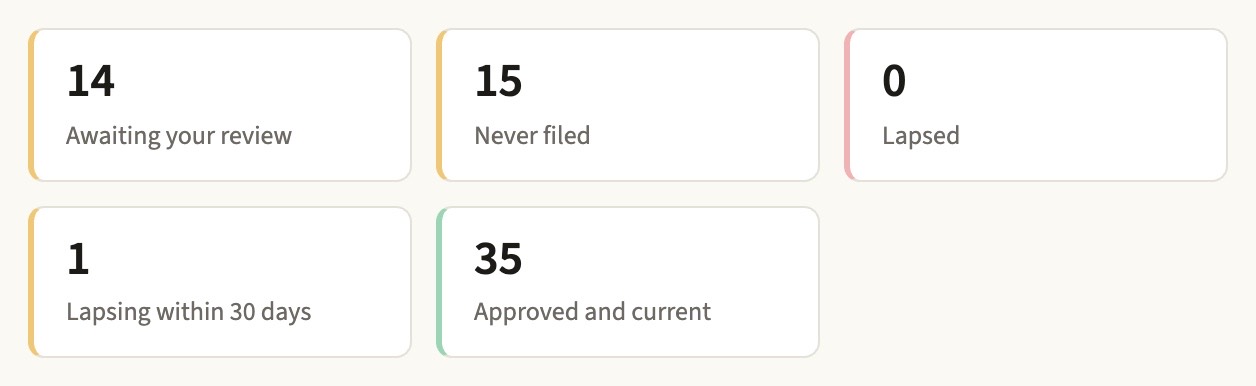
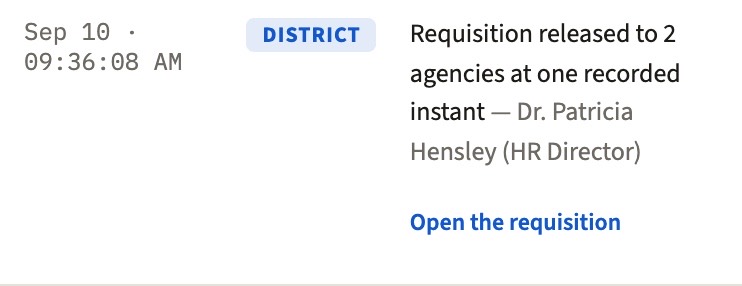
A K-12 MSP (managed staffing provider) is the team that runs a district’s staffing-agency program on its behalf; a K-12 VMS, or vendor management software for school districts, is the software that program runs on. Together they put every agency your district uses — for substitutes, paraprofessionals, special education, related services and school nurses — through one release, one clearance standard, one clock and one invoice. Your district keeps every hiring decision and approves one rate range for each role. Fullbench is both.
Procurement
Your district keeps paying the agencies it already uses, for hours your schools approved, at the rates you approved. Fullbench adds no program fee and no license, so there is no separate purchase to fund. Here is how Tennessee boards approach it.
Cooperative purchasing programs that serve Tennessee
The three paths Tennessee boards use, and the packet we send →
Clearances
T.C.A. § 49-5-413(d) reaches “any person, corporation or other entity who enters into or renews a contract with a local board of education” where the contract puts the person or an employee in direct contact with school children, or on school grounds when children are present (Public Chapter 587 (2007)).
What the credential gate does with them
How Fullbench runs it
Run by a team that staffs schools every day — special education, related services, paraprofessionals, nursing and substitutes — and has made more than 2,000 school placements in the last twelve months.
What stays with your district
“Over the past year, they have demonstrated a consistent level of professionalism, reliability, and responsiveness in addressing our staffing needs.”
“Odyssey Charter School has enjoyed a fruitful and collaborative partnership over the past three years.”
From signed letters of recommendation written to our team by the schools we serve.
Where districts run it
The program is built for districts of every size. In Tennessee that runs from Memphis-Shelby County Schools, Metropolitan Nashville Public Schools, Knox County Schools, Rutherford County Schools, Hamilton County Schools, Williamson County Schools, Clarksville-Montgomery County School System, Sumner County Schools and Wilson County Schools to the single-site charter school.
Questions
It runs every staffing agency the district uses as one program: it onboards the agencies, releases each opening to all of them at once, collects the clearances and documents your office requires, and turns every agency’s approved hours into one invoice. Your district keeps every hiring decision. Fullbench is a K-12 MSP, and it runs the program on its own VMS.
Under T.C.A. § 49-2-203(a)(3), an LEA either follows its local governing body’s purchasing procedures or bids expenditures above the threshold set under § 12-3-1212, which a board may raise by resolution to $50,000 with centralized purchasing and a full-time purchasing agent, or to $25,000 otherwise. Fullbench adds no program fee or license to buy. Boards approve the participation agreement directly, use a cooperative or statewide contract, or run a request for proposals. Your board counsel confirms.
A fingerprint-based criminal history records check by the Tennessee Bureau of Investigation and the FBI. T.C.A. § 49-5-413(d) requires the contracting employer to obtain one for each employee whose work under the contract puts them in direct contact with school children or on school grounds while children are present. Fullbench reviews and approves it before any start date is set.
No. Under § 49-5-413(d)(3), a covered employee may not come in direct contact with school children, or enter school grounds when children are present, until the criminal history records check has been conducted. Fullbench refuses a start date while any required document is missing, unreviewed or expired.
Neither. Your agencies keep supplying their people under their own names, inside the one rate range your office approves for each role. The program is exclusive for the roles it covers, so every agency that fills those roles works through it, and substitute-teacher agreements your district already holds stay separate. Your absence-management system keeps covering your own employees’ absences; Fullbench manages the outside agencies that supply people your district does not employ.
Nothing in program fees: no software fee, no per-seat fee and no implementation charge. Your district pays one consolidated invoice for hours its schools approved, at rates inside the range it approved for each role. Nothing is added to a rate your office approved.
Sources
Read on 30 October 2026 from the statute, regulation and agency pages below. Your board counsel confirms how they apply to your district; we prepare the agreement, its exhibits and a one-page board memo for whichever path you use.
By state
How districts in each state can adopt the program, the cooperative purchasing that operates there, and the clearances the program holds before anyone starts, each cited to the state’s own rules.
The § 16-13B-1 $40,000 Competitive Bid Law, its professional-skill and approved-cooperative exemptions, and the Child Protection Act state and FBI checks and suitability determination held before day one.
Board-set purchasing under AS 14.14.060 and 14.08.101, AS 36.30.700 cooperative purchasing and OPPM statewide master agreements, and the AS 14.20.020 fingerprint check for certification held before day one.
A.R.S. § 15-213 rules with the § 41-2535 $100,000 line, § 41-2632 cooperative purchasing, Mohave and 1GPA, and the A.R.S. § 15-512 DPS fingerprint clearance card held before day one.
The § 6-21-304 bidding threshold, OSP statewide contracts and AEPA's Southwest Arkansas Education Cooperative, and the 6 CAR part 194 State Police, FBI and registry checks for vendor-staffed positions held before day one.
Public Contract Code § 20111 and § 20118, Government Code § 53060, CalSAVE and CMAS, and the Education Code § 45125.1 DOJ and FBI summary and § 49406 TB assessment held before day one.
C.R.S. 22-32-109(1)(b) board bid policy, 22-32-122 service contracts, BOCES and AEPA cooperatives, and the 22-32-122(4) contractor checks and CBI and FBI fingerprints held before day one.
C.G.S. § 7-148v bid ordinances and consortium purchasing, CREC and the RESC Alliance, CTsource, and the § 10-221d criminal history and DCF registry checks and § 10-222c employment history check held before day one.
Title 29, chapter 69 thresholds, State central contracts, and the SBI, FBI and Child Protection Registry checks held before day one.
Rule 6A-1.012 and § 1010.04, state term contracts and Florida Buy, and the §§ 1012.465, 1012.32 and 435.04 Level 2 screening and the Clearinghouse held before day one.
DOAS public notice and statewide contracts open to school districts, RESA cooperative purchasing, and the GaPSC Rule 505-2-.01 and 505-2-.42 fingerprint checks and Clearance certificate held before day one.
The Hawaii Public Procurement Code’s small-purchase, professional-services and cooperative rules, SPO price lists, and the HRS § 302A-601.5 fingerprint check and Harm to Students Registry held before day one.
Idaho Code §§ 67-2806 and 67-2803 thresholds and exclusions, § 67-2807 cooperatives and Division of Purchasing contracts, and the § 33-130 fingerprint check the State Board applies to contractors, held before day one.
The School Code's § 10-20.21 bid rule, the Governmental Joint Purchasing Act co-ops, and the § 10-21.9 fingerprint check and § 22-94 Faith's Law review for contractor staff held before day one.
IC 5-22-6 services purchasing, IC 5-22-4-7 cooperatives, ECPA and Wilson ESC, and the IC 20-26-5-10 expanded criminal history and child protection index checks held before day one.
Iowa Code chapters 26 and 28E, AEA Purchasing and the DAS cooperative program, and the Iowa Code § 279.69 court and registry reviews held before day one.
K.S.A. 72-1151 bidding and its services exemption, the Interlocal Cooperation Act, Greenbush, and KSDE licensure fingerprinting held before day one.
KRS 424.260 and the Model Procurement Code's small-purchase and cooperative rules, PurchasePros (KEDC) and Commonwealth master agreements, and the KRS 160.380 fingerprint and clear CA/N checks held before day one.
R.S. 38:2212.1 bid law and R.S. 39:1702 cooperative purchasing, TIPS and BuyBoard National, and the R.S. 17:15 fingerprint and state central registry checks for contractor staff held before day one.
The 5 M.R.S. § 1743-A construction bid line, interlocal agreements and state master agreements, and the 20-A M.R.S. § 13024 clearance for contracted service providers held before day one.
Education Article § 5-112 bidding, MWCOG cooperative purchasing, and the criminal history and § 6-113.2 reviews held before day one.
The chapter 30B thresholds and § 22 cooperatives, chapter 7 § 22A Commonwealth contracts and MHEC, and the CORI and fingerprint checks under c. 71 § 38R held before day one.
MCL 380.1274 bidding, the Urban Cooperation Act, REMC SAVE and ISD contracts, and the State Police and FBI checks under MCL 380.1230, 1230a and 1230g for anyone working under contract.
Minn. Stat. §§ 123B.52 and 471.345 bidding, § 471.59 joint powers, Sourcewell and the Cooperative Purchasing Connection, and the § 123B.03 BCA background checks held before day one.
The § 31-7-13 $5,000 and $75,000 bid lines and DFA-approved cooperative contracts, and the § 37-9-17 fingerprint and child abuse registry checks that bind substitute staffing firms, held before day one.
RSMo 177.086 and 34.046, the OA Cooperative Procurement Program and EducationPlus, and the RSMo 168.133 Highway Patrol and FBI fingerprint checks held before day one.
The MCA 20-9-204 $80,000 bid line and its cooperative-group path, Montana Cooperative Services and state contracts, and the MCA 20-4-104 and ARM 10.55.716 fingerprint checks held before day one.
The § 73-106 construction bid line, ESU purchasing under § 79-1223 and the Interlocal Cooperation Act, ESUCC and DAS state contracts, and the certificate, substitute permit and § 79-814.01 fingerprint rules held before day one.
NRS 332 thresholds, the professional-services exception and NRS 332.195 joinder, OETC, and the NRS 391.885 to 391.905 and NRS 391.033 checks held before day one.
Board-set purchasing under Ed 303.01, RSA 53-A interlocal agreements and RSA 21-I:17 state contracts, and the RSA 189:13-a fingerprint check for substitutes and contractors held before day one.
The Public School Contracts Law thresholds, the ESCNJ Co-op, and the criminal history and Pass the Trash reviews held before day one.
The Procurement Code’s $60,000 small-purchase line, sealed proposals for professional services and § 13-1-135 cooperatives, CES, and the § 22-10A-5 fingerprint check for contractors’ employees held before day one.
General Municipal Law § 103 and § 104-b, OGS contracts and BOCES, and OSPRA fingerprint clearance held before day one.
G.S. 143-129 and 143-131 bid thresholds, 115C-522 State contracts and BuyBoard, and the 115C-332 SBI fingerprint checks and 115C-332.1 annual registry checks held before day one.
The N.D.C.C. § 15.1-09-34 $50,000 sealed-bid line and its cooperative-purchase exclusions, state contracts and AEPA’s NDESC, and ESPB licensing with its BCI and FBI checks held before day one.
R.C. 3313.46 and 9.48, DAS cooperative purchasing under R.C. 125.04, the Ohio Schools Council and EPC, and the BCI and FBI checks under R.C. 3319.39, .391 and .392 held before day one.
70 O.S. § 5-123 and the Public Competitive Bidding Act, § 5-117b purchasing cooperatives and OMES statewide contracts, and the 57 O.S. § 589 and 70 O.S. § 5-142 checks held before day one.
ORS 279A and 279B thresholds and cooperative procurement, OrCPP, OETC and KCDA, and the ORS 326.603 fingerprint and ORS 339.374 sexual-conduct checks held before day one.
Section 8-807.1 and 5-508 adoption paths, COSTARS and KPN, and the Act 34, 151, 114 and 168 checks held before day one.
The § 45-55-5 municipal bid line, school committee consortia and § 37-2-56 master price agreements, and the § 16-2-18.1 fingerprinted check for contractor staff held before day one.
The Consolidated Procurement Code's §§ 11-35-5320, -5340 and -4810, statewide term contracts and AEPA's CA4I, and the § 59-19-117 record search and sex offender registry check held before day one.
The SDCL § 5-18A-14 $50,000 line and its professional-services exclusion, other governments’ contracts under § 5-18A-22, and the § 13-10-12 DCI and FBI checks and § 13-10-13 bar held before day one.
Education Code § 44.031 and its $100,000 line, interlocal contracts, BuyBoard, Choice Partners and the ESC cooperatives, and the DPS FACT Clearinghouse fingerprint check held before day one.
The Utah Procurement Code and § 63G-6a-2105 cooperative contracts, state cooperative contracts, and the § 53G-11-402 BCI, FBI and rap back checks held before day one.
The 16 V.S.A. § 559 $40,000 bid line, interlocal contracts and state contracts, and the § 255 fingerprint and registry checks for contractors’ employees held before day one.
The VPPA § 2.2-4303 small-purchase line and § 2.2-4304 cooperatives, eVA and MWCOG, and the § 22.1-296.1 contractor certification held before day one.
RCW 28A.335.190 quotes and bids, RCW 39.34.030 interlocal contracts, KCDA, DES and WSIPC, and the RCW 28A.400.303 State Patrol and FBI checks held before day one.
DCPS contracting, the public charter $25,000 RFP rule, MWCOG, and the DCPS background clearance held before day one.
Policy 8200 bid tiers and negotiated services, cooperatives and Purchasing Division contracts, and the § 18-5-15c contractor rule and § 18A-3-10 State Police and FBI checks held before day one.
Wis. Stat. § 66.0901 and § 120.12, § 66.0301 and § 16.73 cooperative contracts, the twelve CESAs and CESA Purchasing, and the § 118.19(10) DPI investigation and § 948.13 bar held before day one.
The W.S. 21-3-110 bid lines and BOCES rule, the Joint Powers Act and Northeast Wyoming BOCES, and the PTSB background check and W.S. 21-7-401 fingerprinting held before day one.
Next step
Pick a 15-minute slot. The invite lands in your inbox before you close this.
Times show in your own timezone; we are in Eastern. If the calendar does not load on your district network, open it in a new tab or use the contact form.
A person replies the same business day, before 5pm ET, with two or three 15-minute slots. Here is the one-page version to forward to whoever else should be on the call.
Prefer to write? Use the contact form; a person replies the same business day.