Fullbench

What it costs

No program fee. No software fee. No purchase order.

Your district keeps paying for the hours your schools approve, at the rates your office set. Fullbench adds no software fee, no per-seat fee, no implementation charge and no purchase order to raise: the program is funded by the agencies that participate. Below: what a business office asks, and the invoice it would receive.

  • One contract
  • One invoice
  • One record
  • One contact
  • $0 program fee
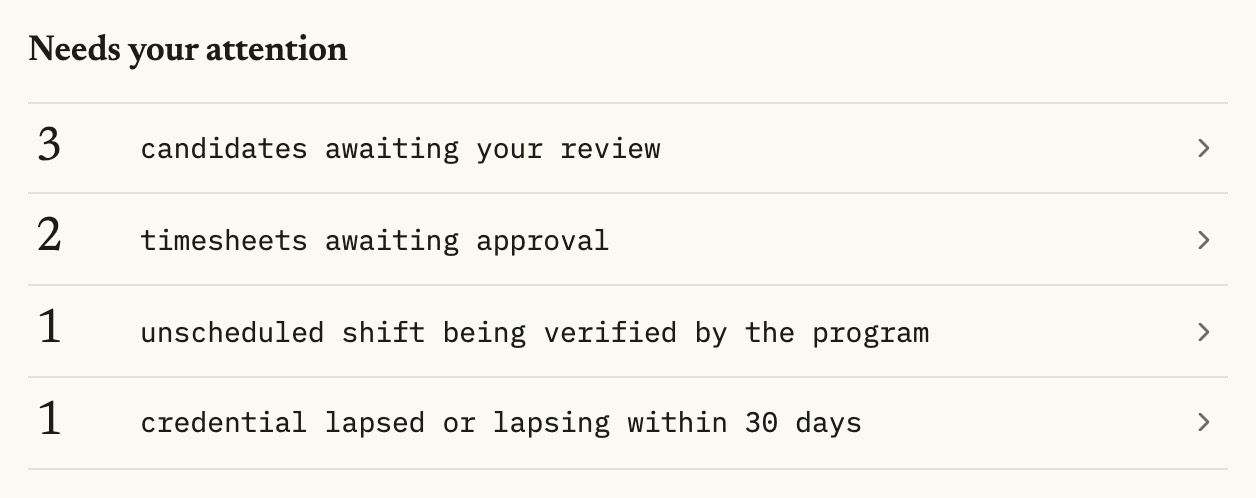
The district overview: candidates awaiting review, timesheets awaiting approval, a shift being verified by the program, and a credential lapsing within thirty days
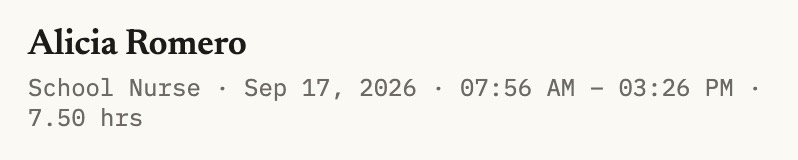
A timesheet waiting on the school: the worker, the role, the date, the hours, and the decision to approve or send it back
Where the invoice comes from: the decisions waiting on your office, and the hours that become a line on the bill.What waits on your office, including the hours that become a line on the bill.

Program terms current as of 25 August 2026. If this page and a signed agreement ever disagree, the agreement governs.

What your district pays

No program fee. Not a trial, not a tier.

You still pay for the staffing hours your schools approve, at the rates your office set; that invoice does not go away and nothing is added to it. What you do not pay is a fee for the program: no software fee, no per-seat fee, no implementation charge, and no purchase order to raise. It is funded by the agencies that participate, on their side of the invoice.

Districts

$0

Program fee. You receive one invoice, at the rates you approved.

  • No software fee, no per-seat fee
  • No implementation charge
  • No purchase order to raise

What you control

Your rates

Your ceiling

Set on every posting. Changed whenever you want.

  • Agencies compete below the maximum bill rate you set
  • Submissions over your ceiling are flagged on arrival
  • No annual escalator, and nothing added to the rate you approve

Everyone

One record

The same ledger, visible to both sides.

  • Agencies keep their identity, their people, and their rates
  • Every release, submission, and decision carries a timestamp
  • Exclusive, preferred, or non-exclusive is your selection

Why this structure matters to you: because the program is funded on the agency's side of the invoice and never out of district funds, nothing the program earns can be added to a rate your office approved. The ceiling is yours, the bill rate is the one you set, and the amount your district pays is the hours your own schools already approved.

One invoice

Every agency's approved hours on one itemized invoice.

One payment from your business office per period, at the rates you approved, with nothing added. Every line traces to a timesheet one of your schools signed off.

AgencyPersonRoleSiteApproved hoursRateLine
Keystone Education StaffingA. RomeroSchool NurseLincoln Elementary37.50$58.00$2,175.00
Keystone Education StaffingM. BellSpecial Education ParaprofessionalWestfield Middle32.00$34.00$1,088.00
Laurel Substitute ServicesO. GrantLong-term Substitute TeacherWestfield High40.00$46.00$1,840.00
Laurel Substitute ServicesP. AnandSpeech-Language PathologistLincoln Elementary18.00$92.00$1,656.00
Total due from the district127.50$6,759.00
The invoice your business office receives: every agency, every person, one total.

Fullbench is paid by the agencies, not by you: after your district pays, we remit each agency its share, and the fee stated in that agency's agreement is deducted from its remittance. Nothing on the invoice is the program's.

One contract

One participation agreement covers every agency you use.

You sign one agreement with Fullbench. Each agency signs its own participation agreement with us, so adding one is an introduction, not a procurement, and removing one is a note to your program contact. Your existing agency relationships and negotiated rates carry over as they are.

What the agreement leaves with you

  • Add or remove an agency at any time, without a new contract.
  • Exclusive, preferred, or non-exclusive is your selection, made in the agreement. Your own employees and direct applicants sit outside it either way.
  • Hire anyone onto your own staff, free past the threshold in the agreement. The schedule is handed to you at the first meeting.

Why the structure matters

Two questions a business office should ask any program.

Is anything added to the rate we approved?

No. Some programs sit between the district and the agency and take their share out of what the district pays, so the invoice is not the number anyone negotiated. Here the invoice carries the bill rate your office approved, hour for hour. The program is funded on the agency's side, after your payment is collected.

Who controls the rates?

You do. Your office sets a maximum bill rate on every requisition and agencies compete below it; a submission over your ceiling is flagged the moment it arrives. There is no annual escalator. The ceiling is yours to change, requisition by requisition.

Not the one who signs?

Send this to your business manager.

One email, from you, with the one-page summary and the sample invoice attached as links. No mailing list; we send it once and copy you.

  • The district one-pager (2 pages, PDF)
  • This page, with the sample invoice
  • How districts adopt it without a purchase order

For your business office

Who you pay, and how districts adopt it.

Who you pay

Your district receives one invoice from Fullbench and makes one payment to Fullbench. We remit each agency its share, itemized line by line, and the fee in that agency's agreement comes out of the remittance. Your AP department cuts one check instead of five, and every line traces to hours your own schools approved. If your district has not paid, no agency has been charged anything.

How districts adopt it

The district pays nothing and raises no purchase order, so there is no program purchase to put out to bid: you keep paying for hours your own schools approved, at the rates you approved. Whether that changes anything for your board is a question for your solicitor and your purchasing policy. We send the agreement, the exhibits, and a one-page board memo before you commit to anything.

Questions

Common questions

What does it cost the district?

Nothing — no software fee, no licences, no implementation charge, and no purchase order to raise. The program is funded by the agencies that participate in it. The order is what matters: your schools approve the hours, your district pays one consolidated invoice at the bill rates your own office approved, we remit each agency its share out of that payment, and the participation fee is deducted from the agency’s remittance. It happens on the agency’s side of the line and only after your payment has been collected, so nothing the program earns is ever added to a rate your district approved or taken out of district funds.

If it is free to the district, how does Fullbench get paid?

By the agencies that participate in it, and only after your district has paid. In order: your schools approve the hours; you receive one consolidated invoice at the bill rates your office approved and pay it; we remit each participating agency its share out of that payment; and the participation fee is deducted from that remittance. So the program is funded on the agency’s side of the invoice, out of what the agency billed — never added to a rate your district approved, never billed to the district, and never deducted from anybody before your payment has been collected. What each agency agrees to is a term of the participation agreement it signs with us; it is not a district term, and it cannot change what your district owes. The sequence is laid out step by step on what it costs your district.

Won't agencies raise rates to cover the fee?

Agencies price the fee like any cost of doing business — the counterweight is that every opening is competed by multiple agencies under a maximum bill rate your office sets and can lower on any posting, with every submitted rate visible side by side. An agency that pads gets undercut. Compare winning rates to what you pay those same agencies today; that's the real test.

How does consolidated invoicing work across multiple staffing agencies?

Every agency’s approved hours become one invoice. Workers clock in and out on the platform, your schools approve the time, and approved hours from every participating agency consolidate into a single itemized invoice per period — instead of separate bills in separate formats on separate cycles. Each line traces back to a placement, a rate you set, and school-approved hours, so your business office reconciles one document rather than five. The agency participation fee is deducted from each agency’s remittance after your district has paid; it is never added to the rate you approved.

All questions

Next step

Nothing to budget for. The next question is where to start.